











Building Technology Products: Legal Decisions Companies Should Make Before Going to Market
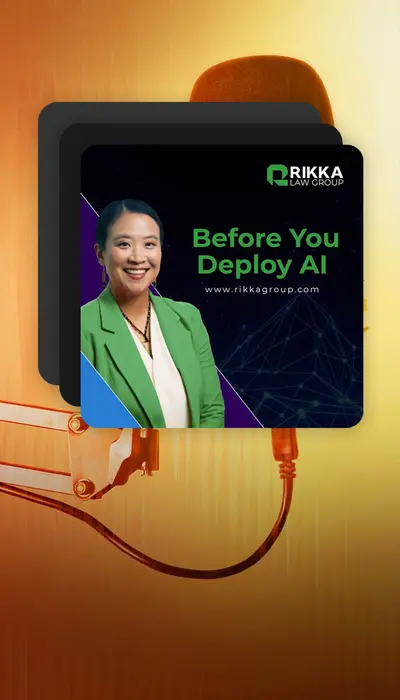
The legal decisions that shape a tech product start long before launch. Charlyn Ho and host Lisa Mosbey cover intellectual property, open-source risks, cloud updates, contracts, marketing claims and launching in multiple markets, and explain why a quick call with a lawyer early can save a product, or even a company, later.
Building Technology Products: Legal Decisions Companies Should Make Before Going to Market
Topics covered
- The laws that shape a product from day one: your industry, your customer and how the product will be used
- False positives and false negatives in AI health tools, and the liability that comes with them
- "By design": building privacy, security and AI governance into a product instead of adding them later
- Legal as a partner to product teams, not "the department of no"
- The four main types of intellectual property, and why registration matters
- Open-source software: the benefits and the hidden vulnerabilities
- IP diligence and code audits when a company is being acquired
- How cloud-based updates make products easier to ship, and easier to break
- Why contracts cover what laws and regulations don't
- Marketing claims, the FTC and deceptive advertising
- Launching across states and countries
Key takeaways
- Legal decisions start before the product exists. The laws that apply depend on your industry, your customer and how the product will be used. Charlyn's example: an AI tool that predicts cancer. A false negative tells someone they won't get cancer when they will, which can create significant legal liability, on top of healthcare laws and rules on how the product is marketed.
- Build legal into the process, not onto the end. Privacy by design, security by design and AI governance by design all mean the same thing: it's not an afterthought. A product that launches with legal liability can end the product, or even the company. A simple consult with a lawyer can surface what the business team hasn't thought about.
- Unregistered IP may not protect as much as you think. The four main types of intellectual property in the U.S. are copyright, trademark, patent and trade secret. Publishing an app gives you some common law rights in your code and your name, but they may be narrower than you expect without registration. A U.S. patent also doesn't carry over to Canada, Europe or any other country.
- Know what's inside your code. Very few products are built from scratch. Open-source software is free, community-built and saves time, but it can carry vulnerabilities that hackers exploit, sometimes for years before anyone notices. Charlyn has seen deals fall apart at the last minute when a code audit found a major vulnerability.
- Easy to ship means easy to break. Cloud software lets companies push new features to every customer at once, with no "I accept" step. If a feature hasn't been thought through, it can break the product, and angry customers may sue.
- Contracts cover what the law doesn't. Laws don't say how much you'll pay, what happens if a product isn't delivered, or who's responsible if a vulnerability leads to a breach. Your contracts do. Even a startup needs solid templates for its customers, key vendors and bank.
- Hype has limits. The FTC regulates consumer protection, including marketing. There's a fine line between making a product sound great and making claims about safety or effectiveness that you can't back up.
- More markets means more rules. U.S. companies face state, city and municipal laws, and other countries add their own. For example, launching in Canada may mean translating your materials into French.
Resources mentioned
- U.S. Copyright Office and U.S. Patent and Trademark Office
- Apple App Store and Google Play Store
- Open-source software and code audits in M&A due diligence
- Cloud infrastructure providers: Microsoft, Amazon and Google
- The Cloudflare update incident
- The Federal Trade Commission (FTC)
- Rikka's compliance agent, an AI tool that helps assess which laws apply in different jurisdictions
- Related episode: privacy by design [PLACEHOLDER, needs episode number]
Favorite quote
"We're the enablers to get them to where they want to go, but still keeping mindful of the risks and liabilities they can face."
Charlyn Ho, Founder, Rikka Law Group