










Buzzworthy Businesses with Charlyn Ho of Rikka Law PLLC
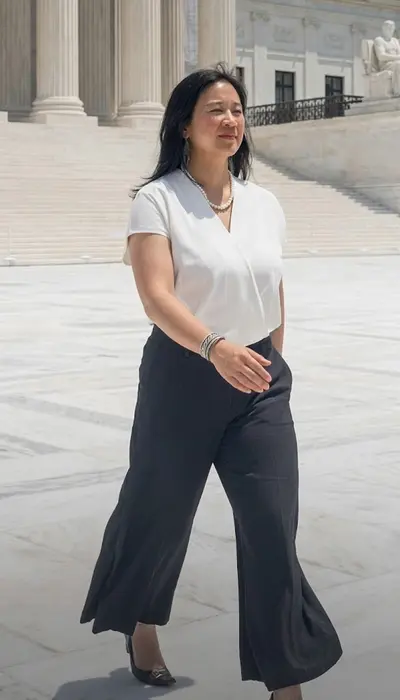
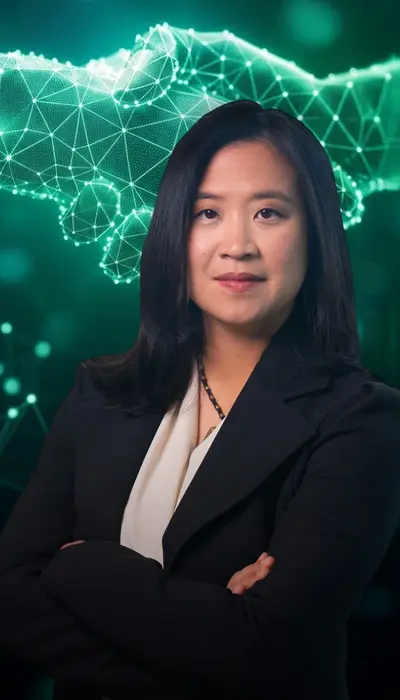
Each week on Buzzworthy Businesses, Steve Strum and John Visser talk to business leaders doing great things in the community. On January 20, 2025, Steve and John speak with Charlyn Ho of Rikka Law PLLC.
Video Transcript
Steve: Welcome back to another episode of Buzzworthy Businesses, I'm Steve Strum. This morning we have a really neat guest. John, tell us who we have today.
John: Hi Steve, thank you for having me on this show. Today we have Charlyn Ho from the Rikka Group. Charlyn, how are you doing?
Charlyn: I'm doing great, thank you so much for having me on the show today.
Steve: Well, you know, welcome, coming from our nation's capital, you are probably entrenched in a lot of different things both business, national, international, technology. I know we were talking a little offset, you are a lawyer that helps businesses with counsel to create deals, manage through technology, intellectual property, all this neat stuff. Tell us a little bit about your firm and what you do.
Charlyn: Yeah, absolutely. So at Rikka we're a strategic advisory firm that helps clients at the intersection of law, tech, and policy, capitalize on business opportunities in a compliant manner. So in other words, we are all lawyers at our firm, but in the realm of technology like artificial intelligence, blockchain technology, consumer wearables, health tech, it goes so much beyond just the basics of law. There's a holistic element that we try to bring to our practice by helping clients with the non-legal aspects as well. For example, with AI, the laws are still developing, but there are a lot of best practices so you don't end up on the Wall Street Journal or New York Times front page for having a racist algorithm, for example. We advise on not only the legal piece but governance, ethics, compliance generally.
Steve: So you had just mentioned some very interesting phraseology, a racist algorithm. What does that mean? I mean, yes, all of this stuff is new and still developing, what exactly is a racist algorithm?
Charlyn: Yeah, that's a great question. So an algorithm is computer software, but the difference between traditional computer software and artificial intelligence, particularly the age of generative artificial intelligence which is kind of where we're at today, is that AI algorithms can learn. So in the past you had to program, for example, if you see the word Viagra in your email then the computer will take that email and drop it into your spam box. But there's so many more sophisticated spam now that they may use any number of words, and the AI algorithm can learn to recognize other words besides the one you expressly programmed. The challenge with AI is that it needs a lot of data to learn, and data, especially if it's historical data, which really all data is, it could contain things that are biased. And that's just another word for saying it treats certain groups of people differently than other groups of people for no apparent reason. So for example, if an algorithm treats African-Americans as not deserving of credit on a higher percentage than white applicants for credit, then that could be an instance of where the outcome of the algorithm is racist, even though nobody intended it to be racist. It's really how the algorithm is learning from data that may have been collected in the past and may reflect some historical biases.
Steve: John, that is so fascinating. Think about that, and you know the speed of all this stuff. Data is the new oil that you've heard about, or this is another Gold Rush, or the Renaissance of computation. Things that don't exist now may exist within 6 to 12 months, and most people that are deploying AI on their website, you know, credit guys, maybe construction people that are having a website and somebody sold them AI. I mean these are just like, you know, the spider we just crossed. John, isn't that fascinating?
John: You know, Stephen, I don't know about you, but I come out of an era where I only know a litigation lawyer, a defense lawyer, and a divorce lawyer. Charlyn, you are super specialized in a whole new area. How did you decide to go into this very specific niche?
Charlyn: Well, I actually am living in Washington DC because the Navy brought me here. My job in the military was to negotiate defense contracts to refuel, construct, and repair nuclear-powered aircraft carriers and submarines. So I've always been integrated with the contract side and technology. Back then I wasn't a lawyer, the Navy sent me to law school, but I was responsible for speaking with the engineers about how much, how do we repair this pump, what kinds of engineering tools do you need, what types of resources, and then I would write that into the contract. But as time went on and I went into the private sector, I realized that I really like the new technologies, computers, AI, blockchain, consumer health, Internet of Things, drones, all of these areas that have been developing in the last 10 to 15 years. I really enjoyed counseling on how you make these technologies safe, compliant, and in alignment with what people expect. Because like I said earlier, we provide a holistic practice. If you fly a drone and it is surveilling the atmosphere around someone's house, maybe there are laws that govern that, but also there's just a feeling of creepiness, and so we help technology companies understand what's going to mitigate their risk of being sued and also what does the law actually say.
Steve: Wow, we could talk for a half hour about this stuff, this is just so fascinating. As I'm listening to you, I'm thinking about who is that person that needs to call you, and it's not just the people that are doing geological surveys to make sure we don't have a repeat of an earthquake or a wildfire, which is dominating the headlines lately. But this goes down to Main Street, like in all sincerity, that construction guy that hires that drone operator that then puts AI tools on his or her website may be in violation and doesn't even know it, and now all of a sudden they become extraordinarily liable for something they didn't even know existed. That is just mindblowing. What we're going to do is put your website on our website, which is thedailynewsnetwork.com. People can come and check you out, see some of the areas, because the light bulbs are probably going on for people watching, going oh boy. Thank you so much for joining us today and for all the hard work you do. And do not let me underscore, thank you for your service to our great country. I'm military family, it rings a little different for somebody who serves, so thank you for that. John, man, can't do this without you, what a great interview we've had today.
John: Steve, thank you for having me here, and thank you Charlyn for joining us.
Steve: Absolutely, and we can't do it without these people watching. So guys, please make sure to check out Charlyn's website at thedailynewsnetwork.com. Fascinating things are happening, and some things that don't exist yet that we have to be prepared for. If you like this episode or find somebody that might say oh boy, I need to be having that dialogue, click the share button. Remember, always live with gratitude.