











ChatGPT Can Get You Fired - Privacy Attorney Charlyn Ho Explains the Legal Risk
Could sharing work documents with ChatGPT put your job at risk? On the Smarter Online Safety Show, AI and data privacy attorney Charlyn Ho, Navy veteran and founder of Rikka Law Group, explains what happens to your data in AI chatbots, why free tools can expose confidential information, whether these apps are safe for kids, and how small businesses can use AI without a legal team. A plain-English guide to using AI safely in 2026.
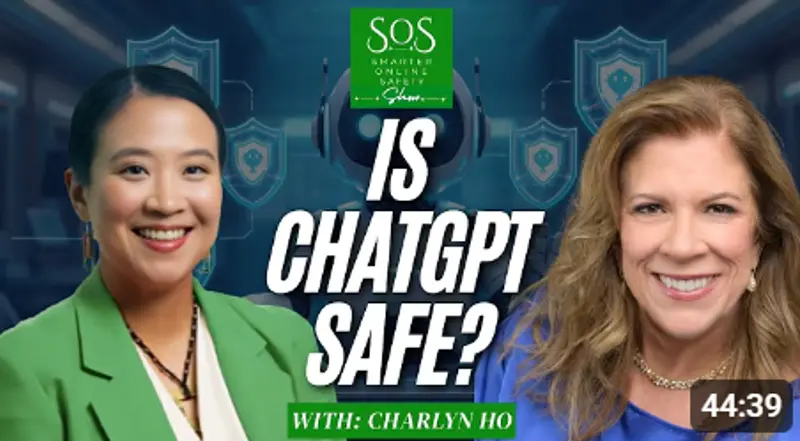
ChatGPT Can Get You Fired: Privacy Attorney Charlyn Ho Explains the Legal Risk
Originally featured on Smarter Online Safety with Jocelyn King.
What happens when an employee pastes a confidential contract into their personal ChatGPT account to “just summarize it”?
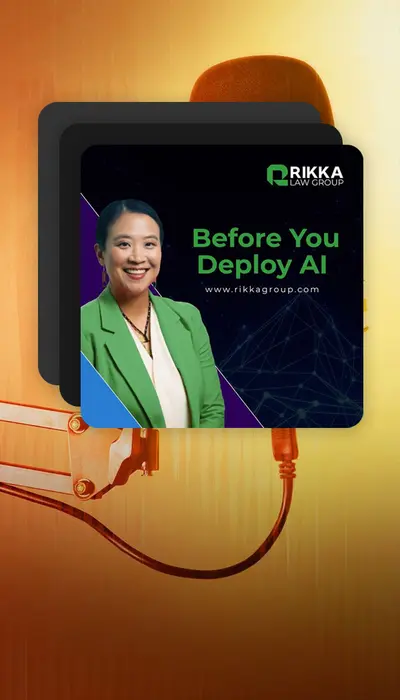
In this episode, Jocelyn King talks with Charlyn Ho: former Navy Supply Corps officer, former partner in Perkins Coie’s Technology Transactions and Privacy Group, and founder and CEO of Rikka Law Group. Charlyn spent six years turning nuclear technology into contract language for aircraft carriers. Now she does the same translation work for AI, privacy, and cybersecurity. She explains what’s buried in the fine print of the AI tools we use every day, and what that means for you as a person, a parent, an employee, and a business owner.
If you use AI at work, or your team does, this one is worth 45 minutes.
Topics Covered
- From Navy contracts to AI law: why translating technical language is the real job
- What AI privacy policies actually say about your data (and the clause that can swallow the rule)
- Free vs. paid AI tools: why the payment isn’t what changes your legal protection
- App permissions, “dark patterns,” and why Charlyn picks “one time only”
- What COPPA and FERPA do and don’t cover for kids and schools using AI
- The legal risk of pasting work documents into personal AI accounts
- Closing the gap between leadership AI mandates and restrictive employee policies
- Practical AI advice for small business owners without a legal team
Key Takeaways
- The privacy policy is where the answers are. It spells out whether the provider can train on your data or keep it forever. Watch for exceptions like “except for safety and content moderation.”
- Free doesn’t mean safe, and paying isn’t automatically safe either. What protects you is the economic model and the terms. Higher tiers usually commit to not training on your data. Free tiers often don’t. If there’s no payment for the product, your data may be the product.
- The account you use decides your liability. Pasting company data into a personal AI account can mean a breach of confidentiality, a firing, or a lawsuit. The fix is simple: ask IT what’s allowed, then follow it.
- Kids’ privacy laws are narrower than parents think. COPPA only covers children under 13 and only online operators directed at kids or with actual knowledge. Monitoring is still the parent’s job.
- AI governance needs nuance, not blanket rules. Allocate tokens by role. Set policy by risk level. Close the gap between what management mandates and what employees are allowed to do.
- AI doesn’t rewrite your compliance obligations. For small businesses, it’s another tool. The same disability, health and safety, and cybersecurity laws still apply, plus the added risk of AI that can learn and act on its own.
Resources Mentioned
- Children’s Online Privacy Protection Act (COPPA)
- Family Educational Rights and Privacy Act (FERPA)
- Rikka article on AI chatbots and companion apps for minors: [PLACEHOLDER, needs article link]
- The AI Savvy Lawyer by Charlyn Ho (coming soon): [PLACEHOLDER, needs waitlist link]
- Rikka Law Group: rikkagroup.com
- YouTube Channel: Rikka Group